Timeline

1

2025.6

Problem Discovery

Our project originated from a simple observation: coastal cities generate large amounts of discarded shrimp and crab shells. Further exploration revealed that these shells are rich in chitin, a valuable biopolymer with proven benefits in infection control, wound healing, and scar reduction.

While advanced wound care products face challenges in balancing these functions, the seafood industry continues to produce massive shell waste. Our work bridges these two gaps by converting crustacean shell waste into a sustainable, high-value medical material for advanced wound care.
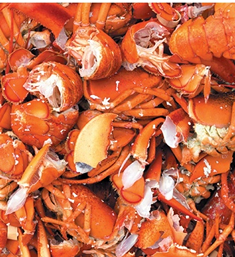
Discarded Shrimp and Crab Shells
2

2025.7

Model design

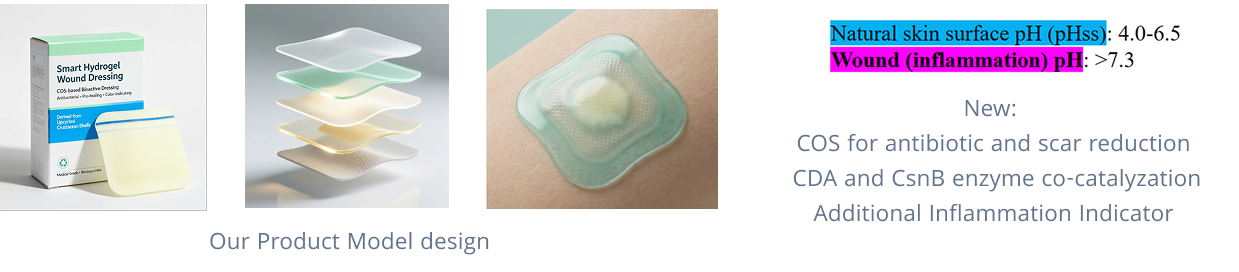
In July, we turned the idea into a concrete technical product. Instead of conventional acid–alkali processing, we designed a low-energy, enzyme-based cascade to convert shell-derived chitin into bioactive chitooligosaccharides (COS).

At the same time, we defined the product vision: a COS-functional hydrogel wound dressing that not only accelerates healing and reduces scarring, but also visually indicates inflammation via pH-responsive color change.

Product Design and Model
3

2025.8

Enginerring enzyme

In August, we moved fully into laboratory execution. We constructed recombinant plasmids encoding CDA and CsnB enzymes and transformed them into E. coli BL21 (DE3) expression strains. Protein expression was induced using IPTG, and successful expression was confirmed through SDS-PAGE analysis, verifying the presence and molecular weight of both enzymes. Also, we validated their catalytic activity.

Laboratory Execution and Protein Expression
4

2025.9

COS extraction

In September, we then completed the full conversion line:
Shrimp/crab shells → chitin → chitosan → COS
achieving reliable COS yields under mild, environmentally friendly conditions.

COS Extraction Process
5

2025.10

Anti-biotic test

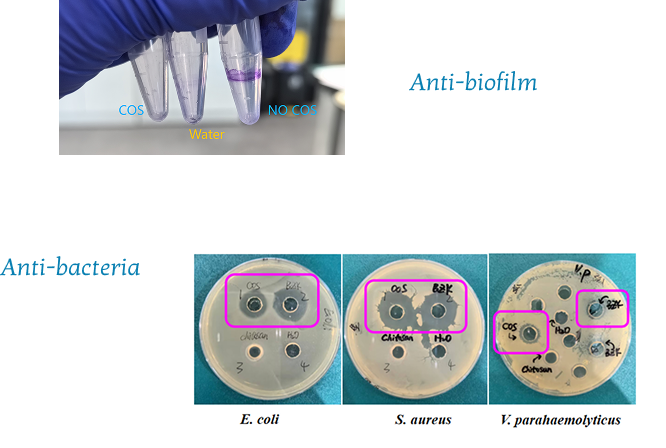
In October, we evaluated whether our COS truly performs in wound-relevant conditions.

Using cultured E. coli, S. aureus, and V. parahaemolyticus, we conducted antibacterial inhibition zone test: including Benzalkonium, COS, Water, Chitosan

Anti-biofilm test uses crystal violet staining

Results showed that COS exhibited strong antibacterial and biofilm-disrupting activity, while remaining non-irritative and tissue-friendly.

Anti-biotic Test Results
6

2025.11

Layer making

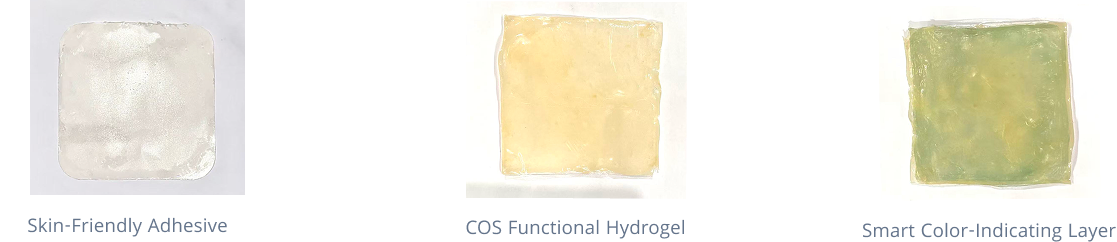
In November, we integrated COS into a multi-layer hydrogel dressing prototype.

The dressing combined 5 layers: Three main layer and two polyurethane Film

Multi-layer Hydrogel Dressing Prototype
7

2025.12

Final product test

By December, we completed final system-level validation:

• Skin compatibility testing through small-scale human patch tests (0–I grade)

• Mechanical and absorption performance testing, confirming adequate exudate

• Consolidation of biological, functional, and usability data into a complete prototype

Final Product Test and Skin Compatibility

Future Outlook

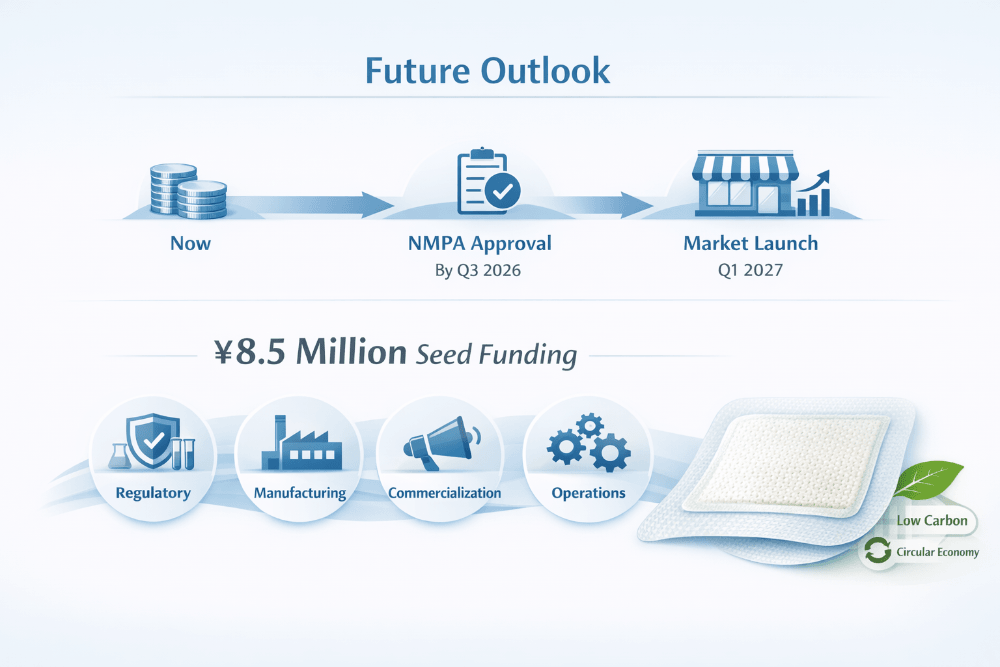
Chito Matrix is preparing for commercialization and regulatory advancement. We plan to raise ¥8.5 million in seed funding to complete NMPA registration, scale GMP manufacturing, and support early market entry. With this funding, we target regulatory approval by Q3 2026 and first commercial revenue in Q1 2027.

Our funding mix includes healthcare-focused venture capital, sustainability impact investors, and strategic angels with strong distribution experience in aesthetic and sports medicine. In parallel, we are pursuing carbon emission reduction subsidies, expected to contribute an additional 5–10% revenue uplift, strengthening both financial and environmental sustainability.

Future Outlook